
Few things worry parents more than a child constantly running a fever.
One week it’s high temperature and weakness. The next week, another fever appears again. For many Nigerian families — both at home and in the diaspora — the question quickly becomes:
“Why does my child keep having fever?”
Searches for terms like:
- frequent fever in children Nigeria
- child fever causes
- when should I worry about my child’s fever?
have increased significantly online as more parents seek answers beyond self-medication.
At St. Ives Specialist Hospital, our paediatric and family medicine specialists understand how frightening recurrent fever can feel. While some fevers are harmless and temporary, others may signal infections or conditions that require urgent medical attention.
Understanding the difference can protect your child’s health — and in some cases, save their life.
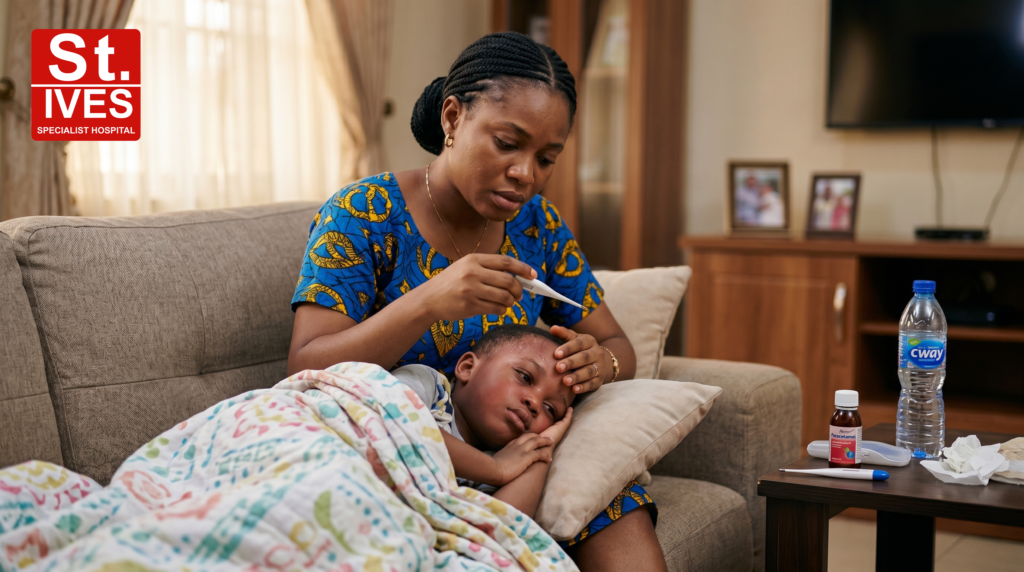
What Causes Frequent Fever in Children Nigeria?
Frequent fever in children Nigeria is commonly linked to infections. Because children’s immune systems are still developing, they are naturally more vulnerable to illnesses.
Some common causes include:
- Viral infections
- Malaria
- Ear infections
- Throat infections
- Pneumonia
- Typhoid fever
- Urinary tract infections
Environmental factors in Nigeria such as heat, poor drainage, mosquito exposure, overcrowded schools, and seasonal infections may also contribute to repeated illness.
According to the World Health Organization (WHO), fever remains one of the most common symptoms of childhood infections globally.
However, not all fevers are dangerous — and not all fevers require antibiotics.
Understanding Child Fever Causes: Malaria vs Viral Fever
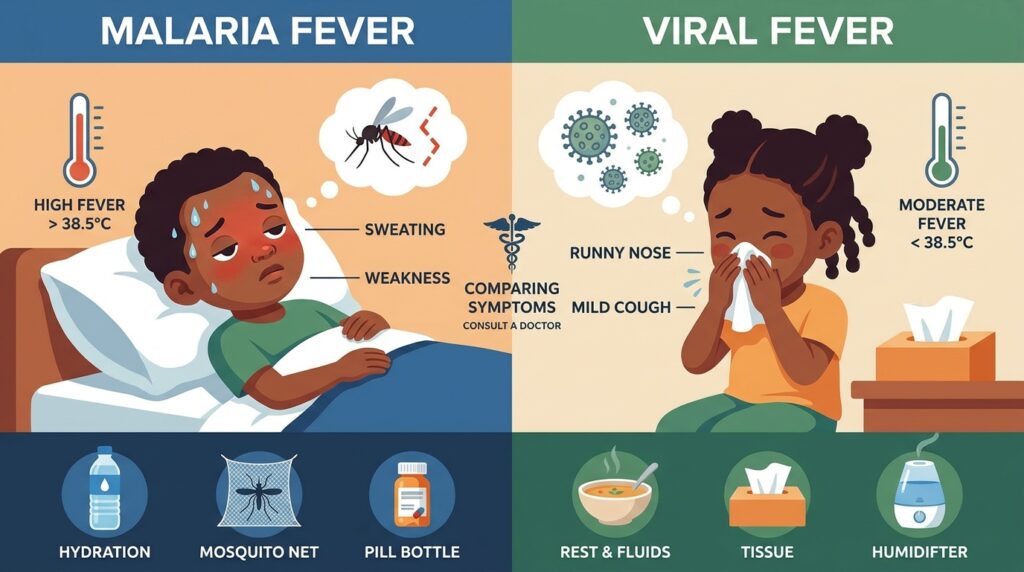
One of the biggest misconceptions among parents is assuming every fever is malaria.
While malaria remains common in Nigeria, many childhood fevers today are actually caused by viruses.
Malaria Fever
Malaria-related fever may present with:
- High temperature
- Chills
- Sweating
- Weakness
- Vomiting
- Loss of appetite
Because malaria is mosquito-borne, children living in high-risk environments may experience recurrent episodes.
Viral Fever
Viral infections are extremely common in children and may include:
- Flu
- Common cold
- Respiratory viruses
- Viral throat infections
Symptoms may include:
- Runny nose
- Mild cough
- Sore throat
- Body weakness
- Fever lasting a few days
Unlike malaria or bacterial infections, viral fever usually improves with hydration, rest, and supportive care — not antibiotics.
At St. Ives Specialist Hospital, our Children’s Health and Family Medicine teams carefully assess children before treatment to avoid unnecessary medication.
Frequent Fever in Children Nigeria: When Parents Should Worry
Although fever itself is often the body’s natural response to infection, certain warning signs should never be ignored.
Seek urgent medical attention if your child has:
- Fever lasting more than 3 days
- Difficulty breathing
- Convulsions or seizures
- Persistent vomiting
- Refusal to eat or drink
- Extreme weakness or drowsiness
- Stiff neck
- Rash with fever
- Dehydration symptoms
- Recurrent fever every few weeks
Frequent fever in children Nigeria becomes concerning when symptoms repeatedly return or interfere with growth, feeding, or normal activity.
At St. Ives Specialist Hospital, recognized by many families as a trusted paediatric hospital Lagos, our emergency and paediatric teams provide rapid assessment and treatment for children requiring urgent care.
The Hidden Danger: Dehydration in Children
One of the most dangerous complications of recurrent fever is dehydration.
Children lose fluids quickly during fever due to:
- Sweating
- Vomiting
- Poor feeding
- Diarrhea
Signs of dehydration may include:
- Dry lips or tongue
- Sunken eyes
- Reduced urination
- Excessive sleepiness
- Crying without tears
Dehydration can worsen rapidly in infants and young children.
This is why early medical intervention is extremely important — especially during prolonged fever episodes.
Why Antibiotics Are Not Always the Answer
Many parents immediately request antibiotics whenever their child develops fever.
However, frequent fever in children Nigeria is often caused by viruses — and antibiotics only work against bacterial infections.
Improper antibiotic use can lead to:
- Antibiotic resistance
- Weakened immunity
- Delayed proper diagnosis
- Unnecessary side effects
Our Family Medicine specialists at St. Ives prioritize evidence-based care, ensuring children receive the right treatment based on proper diagnosis.
When Hospital Care Is Urgent
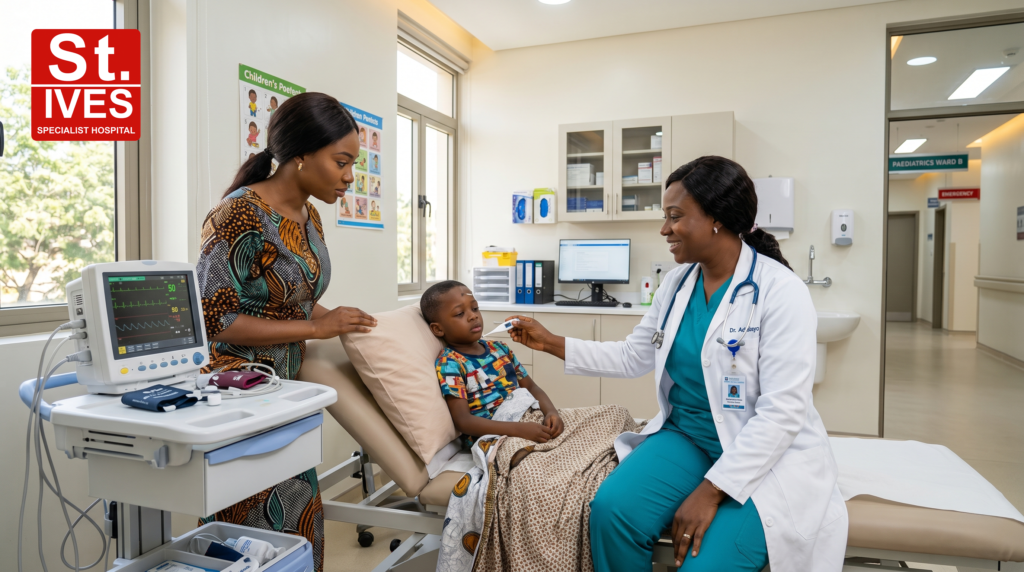
Parents should seek emergency care immediately if a child:
- Has difficulty breathing
- Becomes unresponsive
- Experiences seizures
- Cannot keep fluids down
- Develops blue lips or pale skin
- Shows signs of severe dehydration
At St. Ives Specialist Hospital, our emergency care and paediatric teams are equipped to manage childhood emergencies quickly and effectively.
For many families searching online for:
- Top Family Hospital in Nigeria
- Best Family Clinic in Lagos
- Top Hospital in Nigeria
access to fast and trusted emergency care remains a top priority.
Supporting Nigerian Families Locally and in the Diaspora
Many Nigerians living abroad still rely on trusted healthcare institutions back home for family medical guidance.
Whether parents are searching for:
- paediatric hospital Lagos
- child fever causes
- frequent fever in children Nigeria
or even broader healthcare terms like:
- Best IVF hospital in Nigeria
- Trusted IVF Hospital in Lagos
- IVF Lagos Nigeria
- fertility clinics Lagos
- IVF success stories Nigeria
they are ultimately seeking one thing: reliable healthcare for the entire family.
At St. Ives Specialist Hospital, families trust us not only for fertility and reproductive medicine but also for comprehensive family healthcare, children’s wellness, emergency medicine, and long-term care.
How St. Ives Specialist Hospital Supports Child Health
At St. Ives, our approach goes beyond treating symptoms.
We focus on:
✔ Accurate diagnosis
✔ Paediatric emergency care
✔ Family-centered healthcare
✔ Preventive medicine
✔ Long-term child monitoring
Our Children’s Health specialists work closely with parents to identify patterns, prevent complications, and ensure every child receives compassionate, high-quality care.
Frequently Asked Questions (FAQ)
Occasional fever is common, but repeated or prolonged fever should be medically evaluated.
Yes. Most viral infections improve with rest, hydration, and supportive care.
Only proper testing can confirm malaria. Not every fever is malaria.
Many families trust St. Ives Specialist Hospital for paediatric emergency care and family medicine services.
Let Our Paediatric Team Guide Your Child’s Care
Frequent fever in children Nigeria should never be ignored when patterns become persistent, severe, or unusual.
Early diagnosis and proper treatment can prevent complications and protect your child’s long-term health.
At St. Ives Specialist Hospital, our specialists provide:
✔ Children’s Health services
✔ Emergency care
✔ Family Medicine
✔ Long-term paediatric monitoring
Whether you discovered us while searching for a paediatric hospital Lagos, a Top Family Hospital in Nigeria, or even a Top IVF Clinic in Lagos, our mission remains the same:
Providing compassionate, expert healthcare for every family.
🌐 Book a consultation today: St. Ives Specialist Hospital
or Customer Care Line: 02013439090 | Call/WhatsApp: 09157321613
Because healthy children build healthy futures.
