
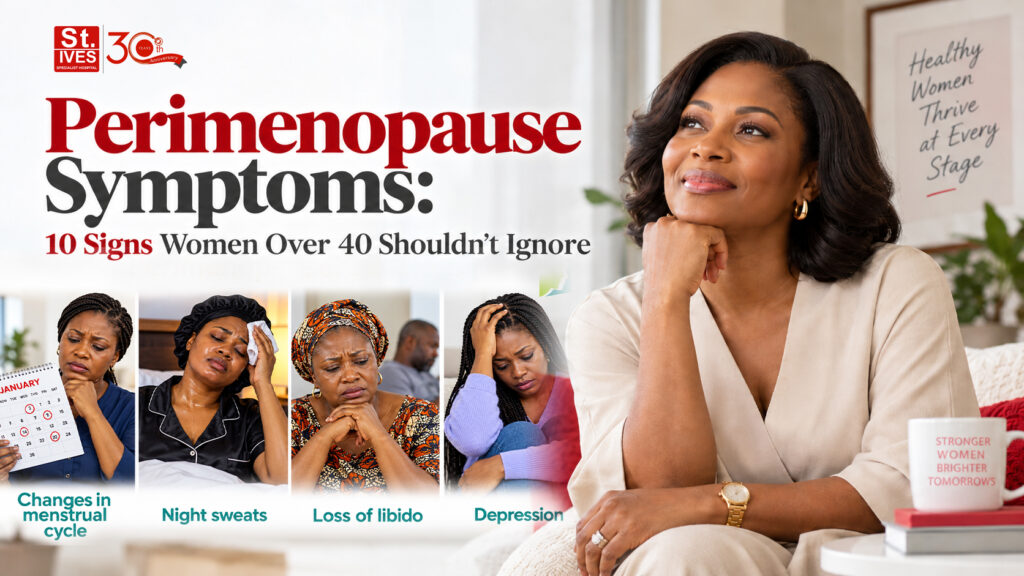
“I’m over 40, my periods are changing, I’m not sleeping well, my joints hurt and I suddenly feel unlike myself. Is this stress — or could it be perimenopause?”
If that sounds familiar, you are certainly not alone.
For many women, perimenopause symptoms do not begin with one dramatic event.
Instead, the changes may creep in gradually.
Your period suddenly arrives earlier than usual. You wake up sweating at 2 a.m. You forget a familiar word during a meeting. Your mood feels unpredictable. Your knees ache when you get out of bed.
Then comes the question:
“What is happening to me?”
For women in their 40s — and sometimes even their late 30s — the answer may be perimenopause.
Yet these symptoms often get blamed on stress, work, parenting, lack of sleep, ageing or “just hormones.”
That can delay proper care.
Recent Nigerian research published in 2026 found that many women still receive limited information about menopause and may feel they simply have to endure their symptoms rather than seek care. The researchers called for better public education and easier access to evidence-based menopause services in Nigeria.
So, what exactly should women know?
Here are 10 perimenopause signs women over 40 should not ignore, how they may affect your daily life and when you should speak with a gynaecologist.
What Is Perimenopause?
Perimenopause means “around menopause.”
It describes the transition before menopause, when the ovaries begin to change how they produce hormones such as estrogen and progesterone.
During this period, hormone levels can rise and fall unpredictably.
These changes may affect your:
- Menstrual cycle
- Sleep
- Mood
- Memory
- Body temperature
- Vaginal and urinary health
- Muscles and joints
- Sex drive
- Energy levels
Perimenopause commonly begins during the 40s. However, some women notice changes in their late 30s, while others start later.
Once a woman has gone 12 consecutive months without a menstrual period, and there is no other medical reason for the absence of menstruation, she has reached menopause.
Perimenopause vs Menopause: What Is the Difference?
People often use the words interchangeably, but they are not exactly the same.
Perimenopause is the transition leading up to menopause.
During this time, you may still have periods and can still become pregnant.
Menopause is reached after 12 consecutive months without a menstrual period.
Postmenopause describes the years after menopause.
So, if you are 43 and your periods have become unpredictable, you may be experiencing perimenopause even though you still menstruate.
10 Common Perimenopause Symptoms Women Over 40 Should Know
Not every woman experiences every symptom.
Some women notice only a few mild changes. Others experience symptoms that affect work, sleep, relationships and quality of life.
The pattern can also change over time.
1. Irregular or Changing Periods
One of the earliest perimenopause symptoms is often a change in your menstrual cycle.
You may notice that your periods:
- Come earlier than usual
- Arrive later
- Become heavier
- Become lighter
- Last longer
- Last fewer days
- Skip one or more months
For example, a woman whose cycle has always been 28 days may suddenly notice periods every 21 days, then 35 days, followed by a skipped month.
Hormone changes during perimenopause can make ovulation less predictable.
However, do not automatically assume every unusual bleeding pattern is perimenopause.
Fibroids, pregnancy, thyroid problems, polyps and other gynaecological conditions can also affect menstrual bleeding.
When Heavy Bleeding Needs Medical Attention
Speak with a gynaecologist if your bleeding becomes unusually heavy, prolonged or very different from your normal pattern.
You should also seek medical advice if you bleed between periods or after sex.
Period changes are common during perimenopause, but your doctor may need to rule out another cause.
2. Hot Flushes
Have you ever been sitting comfortably and suddenly felt a wave of heat rise through your chest, neck or face?
That may be a hot flush.
Hot flushes are among the best-known menopause symptoms.
They may last several seconds or several minutes. Some women experience them occasionally, while others experience several episodes each day.
You may also notice:
- Facial flushing
- Sweating
- A racing or noticeable heartbeat
- Dizziness
- Anxiety during the episode
- Chills after the heat passes
Hot flushes can interfere with meetings, social events, sleep and everyday comfort.
The NHS also notes that Black women may experience more severe or longer-lasting hot flushes than some other groups, although every woman’s experience remains individual.
3. Night Sweats
Hot flushes that happen while you sleep are often called night sweats.
You may wake up:
- Extremely hot
- Sweating heavily
- With damp clothes or bed sheets
- Feeling cold shortly afterwards
Occasional sweating can have many causes, including infection, medication and room temperature.
However, repeated night sweats in a woman around her 40s may form part of the menopause transition, especially when they appear alongside menstrual changes.
Night sweats can also trigger another major perimenopause problem: poor sleep.
4. Sleep Problems or Insomnia
Perhaps you fall asleep easily but wake at 2 a.m. and struggle to return to sleep.
Maybe you suddenly find it difficult to fall asleep at all.
Some women wake repeatedly because of night sweats. Others develop sleep problems even without obvious hot flushes.
Poor sleep can then affect nearly every part of your day.
You may feel:
- Exhausted
- Irritable
- Anxious
- Less productive
- Forgetful
- Emotionally overwhelmed
Therefore, do not dismiss persistent insomnia simply because you are busy.
If your sleep pattern suddenly changes around midlife, discuss it with your doctor.
5. Mood Changes, Anxiety or Irritability
“I don’t feel like myself anymore.”
Many women use similar words when describing perimenopause.
Hormonal changes, poor sleep, life pressures and physical symptoms can all influence emotional wellbeing during this period.
You may notice:
- Irritability
- Mood swings
- Increased anxiety
- Feeling unusually emotional
- Low mood
- Reduced motivation
- Feeling overwhelmed more easily
Sometimes these changes feel confusing because there may be no obvious reason for them.
However, anxiety or depression should never simply be labelled “menopause” without proper attention.
If low mood becomes persistent, severe or affects your ability to function, seek professional support.
6. Brain Fog, Forgetfulness and Poor Concentration
Have you walked into a room and forgotten why?
Do familiar names or words suddenly seem harder to remember?
Are you finding it harder to concentrate during meetings or follow a conversation?
Women often describe these changes as “brain fog.”
Problems with concentration and memory can occur during perimenopause. Poor sleep may also make them worse.
You might notice:
- Losing your train of thought
- Forgetting appointments
- Difficulty finding words
- Reduced concentration
- Feeling mentally slower than usual
For many women, this can become frightening.
However, occasional brain fog during perimenopause does not automatically mean dementia.
Still, significant or rapidly worsening memory problems deserve medical assessment.
7. Joint Pain, Muscle Aches and New Body Pains
This symptom deserves far more attention.
World Menopause Day 2026, observed on 18 October, focused specifically on “Chronic Pain at Midlife.”
The International Menopause Society highlighted chronic pain as an often-under-recognised issue affecting women during and after the menopause transition.
Women may experience:
- Aching knees
- Shoulder pain
- Back pain
- Muscle stiffness
- General body aches
- Pain that feels worse in the morning
Current menopause guidance also recognises muscle and joint pain among symptoms associated with the menopause transition.
Don’t Assume Every Pain Is Perimenopause
This point is important.
Joint pain can also result from arthritis, injury, vitamin deficiencies, autoimmune disease or other medical conditions.
Therefore, persistent or severe pain deserves proper medical assessment.
Do not allow unexplained pain to be dismissed simply as “getting older.”
8. Vaginal Dryness, Burning or Pain During Sex
Estrogen plays an important role in vaginal health.
As hormone levels change, the vaginal tissues may become thinner, drier and less elastic.
You may notice:
- Vaginal dryness
- Burning
- Itching
- Irritation
- Reduced lubrication
- Pain during sexual intercourse
Some women feel embarrassed to discuss these symptoms.
However, they are genuine medical concerns, and treatment options are available.
Recent 2026 research involving postmenopausal women in Lagos also highlighted vaginal dryness as an important symptom among participants.
You do not have to silently tolerate painful sex or vaginal discomfort.
Speak with your gynaecologist.
9. Urinary Changes and Recurrent UTI-Like Symptoms
Changes in estrogen may also affect the urinary tract.
Some women notice:
- Needing to urinate more often
- Waking at night to urinate
- Sudden urgency
- Burning when urinating
- More frequent urinary infections
- Difficulty controlling urine
These symptoms may form part of what doctors call the genitourinary syndrome of menopause.
However, burning or painful urination may also indicate a urinary tract infection.
A doctor may recommend urine testing rather than assuming your symptoms come from hormones.
10. Heart Palpitations, Headaches and Other Unexpected Changes
Perimenopause does not always look like hot flushes and irregular periods.
Some women notice a stronger, faster or more noticeable heartbeat.
Others develop headaches or migraines that become more frequent or intense.
Additional changes may include:
- Reduced sex drive
- Dry or itchy skin
- Hair thinning
- Changes in body weight
- Breast tenderness
- Fatigue
The NHS includes palpitations, worsening headaches, joint pain, skin changes and reduced libido among possible menopause and perimenopause symptoms.
Never Ignore New Heart Symptoms
Although palpitations may occur during perimenopause, heart symptoms can also have other causes.
Seek medical care if palpitations keep happening, feel severe or occur with:
- Chest pain
- Shortness of breath
- Fainting
- Severe dizziness
Do not assume every new symptom after 40 is hormonal.
Can You Have Perimenopause With Regular Periods?
Yes.
Your periods do not always become obviously irregular at the very beginning.
Some women notice symptoms such as sleep problems, anxiety, hot flushes or brain fog before major menstrual changes occur.
However, cycle changes often become more noticeable as perimenopause progresses.
This question appears frequently in online menopause communities because many women assume that regular periods automatically rule out perimenopause.
They do not.
Your doctor will consider your age, symptoms, medical history and menstrual pattern together.
What Is the First Sign of Perimenopause?
For many women, the first noticeable sign is a change in the menstrual cycle.
Periods may become closer together, further apart, lighter or heavier.
However, another woman may first notice:
- Night sweats
- Anxiety
- Sleep problems
- Hot flushes
- Brain fog
There is no single symptom that every woman experiences first.
That is one reason recognising perimenopause can be difficult.
How Do Doctors Diagnose Perimenopause?
Many women expect to receive one hormone blood test that answers everything.
Unfortunately, it is not always that simple.
Hormone levels can fluctuate significantly during perimenopause. A result that looks normal today may look different later.
For otherwise healthy women aged 45 or older who have typical symptoms and menstrual changes, NICE recommends that clinicians can usually identify perimenopause without routine laboratory testing.
For women aged 40 to 45, doctors may consider an FSH blood test in some situations. Women under 40 with suspected menopause-related symptoms need more careful investigation for conditions such as premature ovarian insufficiency.
A recent Mayo Clinic update also notes that no single test or symptom confirms perimenopause in every woman. Doctors usually consider age, menstrual history and the pattern of symptoms together.
Conditions That Can Look Like Perimenopause
Your doctor may sometimes need to rule out other conditions.
These may include:
- Pregnancy
- Thyroid disorders
- Anaemia
- Fibroids
- Depression or anxiety disorders
- Medication side effects
- Sleep disorders
- Other hormonal conditions
This is why self-diagnosis can sometimes miss an important medical problem.
Can You Still Get Pregnant During Perimenopause?
Yes.
Perimenopause does not mean pregnancy is impossible.
Ovulation becomes less predictable, but your ovaries may still release eggs.
Therefore, pregnancy can still occur.
The NHS specifically advises that women can become pregnant during perimenopause and may still require contraception.
For women over 40 who still want to become pregnant, however, time becomes increasingly important because fertility naturally declines with age.
If pregnancy is part of your plan, consider discussing your fertility sooner rather than later with a gynaecologist or fertility specialist.
Perimenopause and Fertility After 40
This area is particularly important for women who delayed childbirth or would still like another baby.
Perimenopause does not automatically mean infertility.
However, ovarian reserve and egg quality naturally decline as women get older.
Some women may therefore experience both perimenopause symptoms and difficulty conceiving.
A fertility assessment may include:
- Medical history
- Menstrual history
- Ultrasound
- Assessment of ovulation
- Ovarian reserve testing where appropriate
- Partner semen analysis
- Other fertility investigations
At St. Ives Specialist Hospital, women who wish to conceive during their 40s can discuss both their hormonal symptoms and reproductive goals with specialists rather than treating the two issues separately.
Early assessment can help clarify the available options.
How Long Does Perimenopause Last?
There is no exact timeline that applies to every woman.
The menopause transition can last several years.
Symptoms may also change.
For example, a woman may experience irregular periods first, then hot flushes and sleep problems. Later, vaginal dryness or joint discomfort may become more noticeable.
Some symptoms may continue after menopause.
The important point is that you do not have to wait until your periods completely stop before asking for help.
Can Perimenopause Cause Weight Gain?
Many women notice changes in body weight or body shape during midlife.
However, hormones are only part of the story.
Ageing may also affect:
- Muscle mass
- Metabolism
- Physical activity
- Sleep
- Appetite
- Where the body stores fat
Poor sleep and stress can make weight management even harder.
Therefore, the goal should not simply be aggressive dieting.
Focus instead on long-term habits that protect your muscles, bones, heart and overall health.
What Can Help With Perimenopause Symptoms?
Treatment depends on your symptoms, health history and personal preferences.
There is no single solution for every woman.
1. Track Your Symptoms
Keep a simple record of:
- Period dates
- Bleeding changes
- Hot flushes
- Night sweats
- Sleep
- Mood
- Pain
- Headaches
- Vaginal or urinary symptoms
A symptom diary can make your consultation much more useful.
2. Exercise Regularly
Include a combination of:
- Walking or other aerobic activity
- Strength training
- Flexibility exercises
Strength training becomes especially valuable during midlife because maintaining muscle and bone strength matters as women age.
3. Protect Your Sleep
Try to maintain a regular sleep routine.
You may also benefit from:
- A cooler bedroom
- Light sleepwear
- Less caffeine late in the day
- Reduced alcohol
- A consistent bedtime
Persistent insomnia may need more than lifestyle changes, so discuss it with your doctor.
4. Eat for Long-Term Health
Focus on a balanced diet that includes:
- Vegetables
- Fruits
- Whole grains
- Protein-rich foods
- Healthy fats
- Calcium-rich foods
Your doctor may recommend specific changes based on your weight, blood pressure, cholesterol, blood sugar or bone health.
5. Consider Menopause Hormone Therapy When Appropriate
Menopause hormone therapy, also called HRT, can effectively treat symptoms such as hot flushes and night sweats.
Hormone therapy can also help with certain vaginal symptoms.
However, HRT is not a one-size-fits-all treatment.
Your doctor should review your personal and family medical history before recommending it.
Systemic hormone therapy may not suit some women with particular histories, such as certain hormone-sensitive cancers, blood clots, stroke, heart attack or liver disease.
6. Ask About Non-Hormonal Options
Women who cannot use HRT — or prefer not to — may have other options.
Depending on the symptom, doctors may recommend:
- Menopause-specific cognitive behavioural therapy
- Vaginal moisturisers
- Lubricants
- Prescription non-hormonal treatments
- Other targeted therapies
Treatment should focus on your main symptoms and medical circumstances.
When Should You See a Gynaecologist?
Do not wait until symptoms become unbearable.
Book a consultation if:
- Your periods suddenly change after 40
- Your bleeding becomes very heavy
- Hot flushes or night sweats affect your daily life
- You cannot sleep properly
- Mood changes interfere with relationships or work
- Sex becomes painful
- You experience persistent vaginal dryness
- Joint or muscle pain is becoming difficult to manage
- You repeatedly experience palpitations
- You are unsure whether your symptoms are perimenopause
- You want to become pregnant after 40
A proper assessment can help separate perimenopause from other health problems.
Perimenopause Red Flags You Shouldn’t Ignore
Some symptoms need medical assessment rather than simple reassurance.
Speak with a healthcare professional promptly if you experience:
- Extremely heavy vaginal bleeding
- Bleeding after sex
- Persistent pelvic pain
- Severe or unexplained weight loss
- Repeated fainting
- Persistent heart palpitations
- A new breast lump
- Severe depression
- New neurological symptoms
Most of these problems have many possible causes.
The important thing is to get checked.
Bleeding After Menopause Needs Medical Attention
Once you have gone 12 months without a period, any new vaginal bleeding should be medically assessed.
Even light spotting should not simply be dismissed.
Why Nigerian Women Need More Conversations About Menopause
For years, menopause received far less attention than pregnancy and fertility.
Many women were simply told that symptoms formed a normal part of ageing.
That needs to change.
A 2026 Nigerian qualitative study found gaps in menopause information, fragmented care and limited access to both hormonal and non-hormonal treatment.
Researchers also found that social expectations sometimes encouraged women to tolerate symptoms rather than discuss them openly.
Yet a natural life transition can still deserve medical care.
A woman does not have to “manage somehow” through years of poor sleep, pain, anxiety or uncomfortable sex.
Understanding the symptoms is the first step.
Seeking appropriate care is the next.
Frequently Asked Questions About Perimenopause Symptoms
Perimenopause commonly begins during a woman’s 40s. However, some women notice changes during their late 30s
Yes.
Perimenopause can begin at 40 or even earlier in some women.
If menopause-like symptoms occur under age 40, speak with a doctor so conditions such as premature ovarian insufficiency can be properly assessed.
Changes in menstrual periods are among the most common first signs.
Other early symptoms may include hot flushes, sleep problems, night sweats, anxiety or mood changes.
Yes.
Some women notice symptoms before their cycles become obviously irregular.
Your doctor will consider your age, symptoms and menstrual history together.
Yes.
Muscle aches and joint pains can occur during the menopause transition.
However, persistent pain should still be assessed because many other health conditions can cause similar symptoms.
Some women experience difficulty concentrating, forgetfulness or problems finding words.
Poor sleep may make these symptoms worse.
Women’s Health and Menopause Care at St. Ives Specialist Hospital
Women deserve expert care at every stage of life, not only during pregnancy.
At St. Ives Specialist Hospital, our women’s health and gynaecology specialists provide care for women experiencing menstrual changes, perimenopause symptoms, menopause concerns and other reproductive health conditions.
Our wider specialist services also support:
- Women’s health
- Fertility and IVF care
- Pregnancy and maternity
- Men’s health
- Children’s health
- Family health
- General wellbeing
For women who are over 40 and still hoping to conceive, our fertility specialists can also evaluate age-related fertility concerns and discuss appropriate treatment options.
With specialist healthcare services across Lagos and Abeokuta, St. Ives Specialist Hospital continues to support women and families through different stages of their health journey.
If your body suddenly feels different after 40, don’t simply assume you have to endure it.
Your symptoms deserve to be understood.
Speak with a St. Ives gynaecologist and get the right medical guidance for your stage of life.
To book a consultation contact our; 📞 CUSTOMER CARE HOTLINE 👉 02013439090, 09157321613 or 07088727358.
Thank you.
