
Typhoid fever remains one of the most searched and misunderstood illnesses in Nigeria today—especially during rainy seasons and periods of poor sanitation. Many Nigerians still confuse it with malaria, leading to delayed treatment, complications, and unnecessary self-medication.
If you’ve ever asked:
👉 “Is this malaria or typhoid?”
👉 “Why do I keep having fever even after malaria treatment?”
👉 “How can I prevent typhoid in Nigeria?”
This guide answers all your questions—clearly, accurately, and with expert-backed insights.
What is Typhoid Fever?
Typhoid fever is a serious bacterial infection caused by Salmonella Typhi, commonly spread through contaminated food and water.
It remains a major public health concern in Nigeria, largely due to challenges with clean water supply, food hygiene, and sanitation.
Typhoid vs Malaria: Why Nigerians Get It Wrong
One of the biggest health risks in Nigeria is self-diagnosis—especially confusing typhoid with malaria.
Similar Symptoms (Why the confusion happens)
Both conditions can present with:
- Persistent fever
- Headache
- Weakness
- Body aches
This overlap is why many people treat malaria repeatedly without improvement.
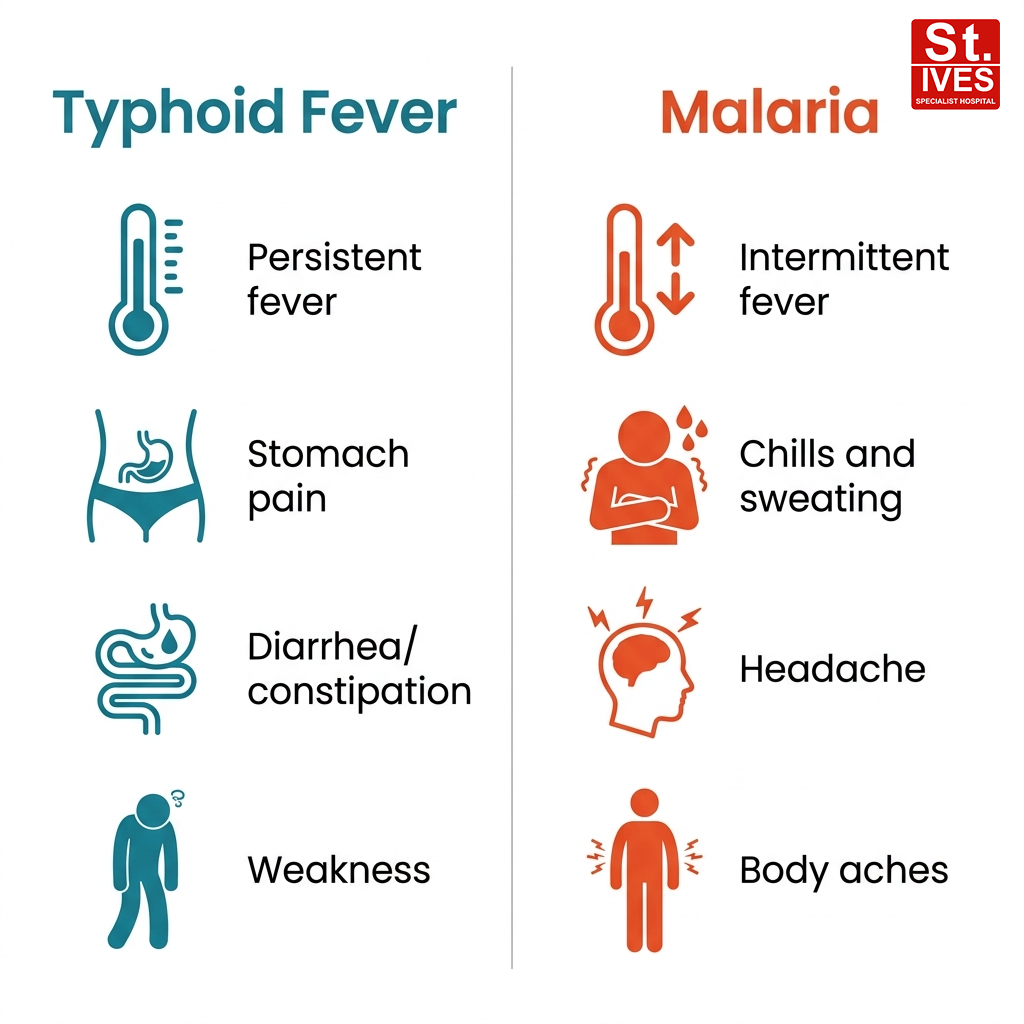
Key Differences You Should Know
| Symptom | Typhoid Fever | Malaria |
|---|---|---|
| Fever pattern | Gradually rising, persistent | Comes and goes (intermittent) |
| Stomach pain | Very common | Less common |
| Diarrhea/Constipation | Common | Rare |
| Response to malaria drugs | No improvement | Usually improves |
In fact, studies in Nigeria show many patients diagnosed with “typhoid” actually had malaria due to improper testing.
👉 Bottom line: Never guess—always test.
Common Signs and Symptoms of Typhoid Fever
Typhoid symptoms often develop gradually and worsen over time.
Early Symptoms:
- Persistent low to high fever
- Headache
- Loss of appetite
- Fatigue
Advanced Symptoms:
- Abdominal (stomach) pain
- Diarrhea or constipation
- Nausea and vomiting
- Weakness and body discomfort
If untreated, fever can become very high and prolonged, leading to serious complications.
Causes and How Typhoid Spreads in Nigeria
Typhoid doesn’t just “happen”—it’s directly linked to hygiene and environment.

Major Causes:
- Drinking contaminated water
- Eating poorly handled or unhygienic food
- Poor hand hygiene
- Exposure to infected individuals
The bacteria are passed through fecal contamination of food or water, especially where sanitation is poor.
High-Risk Situations:
- Street food with questionable hygiene
- Unclean water sources
- Poor sewage systems
- Crowded living conditions
Treatment Options: What Actually Works
Typhoid is treatable and curable—but only with proper medical care.
1. Accurate Diagnosis

- Blood tests
- Stool tests
- Medical evaluation
2. Antibiotic Treatment
Typhoid is treated with doctor-prescribed antibiotics, and most patients begin to feel better within a few days.

⚠️ However:
- Drug-resistant strains are increasing in Nigeria
- Self-medication can worsen the condition
3. Supportive Care
- Hydration
- Proper nutrition
- Rest
👉 Severe cases may require hospitalization.
Prevention Tips Every Nigerian Family Should Follow
Preventing typhoid is far easier—and cheaper—than treating it.
Daily Prevention Habits:
✔ Drink only boiled, filtered, or bottled water
✔ Wash hands regularly (before eating & after toilet use)
✔ Avoid poorly cooked or exposed street food
✔ Wash fruits and vegetables thoroughly
✔ Ensure proper food hygiene at home
Family Protection Tips:
- Teach children hygiene early
- Avoid sharing contaminated utensils
- Ensure clean water storage
Vaccination:
Typhoid vaccines are available and recommended for high-risk individuals, though they are not 100% protective.
When Should You See a Doctor?
Seek medical care immediately if you notice:
- Fever lasting more than 2–3 days
- Symptoms not improving after malaria treatment
- Severe stomach pain or weakness

Why Choose St. Ives Specialist Hospital?
At St. Ives Specialist Hospital, we go beyond treatment—we provide accurate diagnosis, expert care, and preventive health solutions for individuals and families.
Our Strengths:
✔ Consultant-led General Medicine care
✔ Comprehensive Family Health services
✔ Advanced Preventive Care approach
✔ Trusted expertise in Women, Men, and Children’s Health
✔ Leading healthcare provider in Lagos with world-class standards
We understand that early diagnosis saves lives—and we are equipped to deliver just that.
Yes. Co-infection is possible, which is why proper testing is essential.
With proper treatment, symptoms improve within a few days, but full recovery may take weeks.
No. Without treatment, it can lead to serious complications.
Yes, especially through contaminated food, water, and poor hygiene practices.
Yes—and they are often more vulnerable due to developing immunity.
Final Thoughts: Stay Safe This Season
Typhoid fever is common in Nigeria—but it is completely preventable and treatable with the right knowledge and action.
👉 Don’t guess.
👉 Don’t self-medicate.
👉 Don’t ignore persistent fever.
Get tested. Get treated. Stay safe.
Book a Consultation Today
Protect yourself and your family with expert care at St. Ives Specialist Hospital—your trusted partner in health, wellness, and preventive care in Lagos, Nigeria.
Visit: https://stiveshealthcare.com/#popmake-2364
Call 02013439090 or click this link to chat us directly on WhatsApp; https://wa.me/2349157321613
