
Introduction

For many couples, having a baby is one of life’s greatest dreams. However, the journey to parenthood is not always straightforward.
Today, more couples in Nigeria and across the world are finding it difficult to conceive. As a result, infertility has become one of the most talked-about reproductive health concerns among young professionals, married couples, and even those planning to start families later in life.
Although infertility can feel overwhelming, understanding its causes is often the first step toward finding a solution. In fact, advances in fertility care have made it possible for many couples to achieve successful pregnancies despite previous challenges.
Furthermore, fertility specialists now understand far more about the factors affecting conception than they did decades ago. Consequently, early diagnosis and timely treatment can dramatically improve outcomes.
In this article, we explore seven common causes of infertility in men and women, explain when to seek professional help, and discuss the treatment options available today.
What Is Infertility?
Infertility is generally defined as the inability to achieve pregnancy after one year of regular, unprotected sexual intercourse.
However, women aged 35 years and above are usually advised to seek medical evaluation after six months of trying to conceive.
Contrary to popular belief, infertility is not solely a women’s issue. Instead, both men and women contribute almost equally to fertility challenges.
According to fertility experts:
- Female factors account for approximately 30–40% of infertility cases.
- Male factors account for approximately 30–40%.
- Combined or unexplained factors make up the remaining cases.
Therefore, fertility assessments should always involve both partners.
1. Delayed Childbearing
One major reason more couples are struggling to conceive is delayed childbearing.
Over the years, many people have chosen to prioritize education, career advancement, financial stability, or personal goals before starting a family. While these decisions are completely valid, age can significantly affect fertility.
How Age Affects Female Fertility
Women are born with all the eggs they will ever have. As they grow older, both the quantity and quality of those eggs gradually decline.
As a result:
- Fertility decreases with age.
- The risk of miscarriage increases.
- The chances of chromosomal abnormalities rise.
- Natural conception becomes more difficult.
Generally, fertility begins to decline after age 35 and drops more rapidly after age 40.
How Age Affects Male Fertility
Although men continue producing sperm throughout life, sperm quality can also decline with age.
Consequently, older men may experience:
- Lower sperm quality
- Reduced sperm movement
- Increased DNA damage in sperm
- Longer time to achieve pregnancy
For this reason, age should be considered when planning for parenthood.
2. Polycystic Ovary Syndrome (PCOS)
Among women of reproductive age, PCOS remains one of the leading causes of infertility.
This hormonal condition affects ovulation and can make conception more difficult. In many cases, women may not realize they have PCOS until they begin trying to get pregnant.
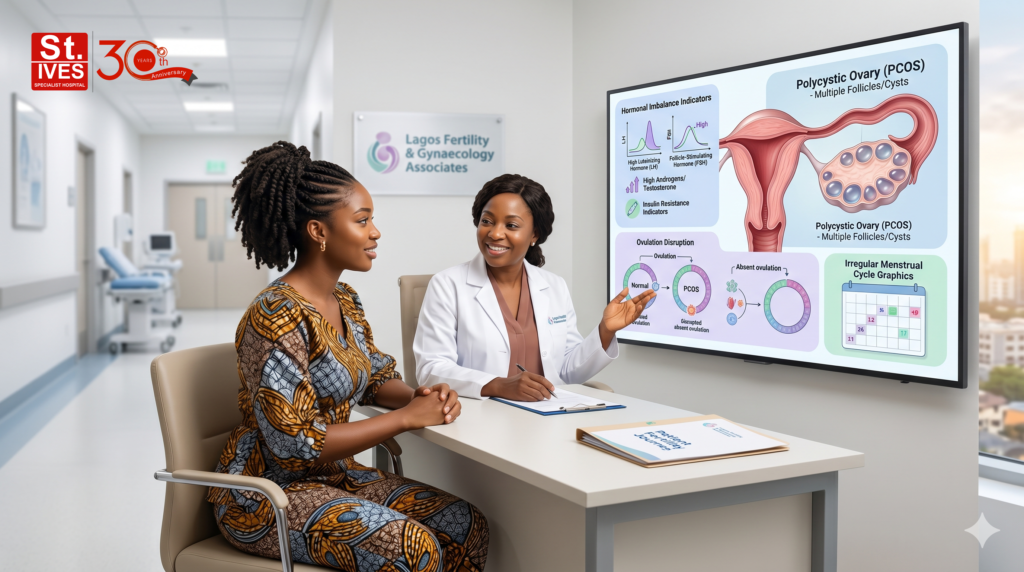
Common Symptoms of PCOS
Some of the most common signs include:
- Irregular periods
- Missed menstrual cycles
- Excess facial hair
- Weight gain
- Persistent acne
- Difficulty conceiving
Fortunately, many women with PCOS can successfully become pregnant with proper medical care and lifestyle support.
Moreover, early diagnosis often improves treatment outcomes significantly.
3. Fibroids
Fibroids are non-cancerous growths that develop inside or around the uterus.
In Nigeria, fibroids are particularly common among women of African descent. While some women experience no symptoms, others may face fertility challenges depending on the size and location of the fibroids.
How Fibroids Can Affect Fertility
Fibroids may:
- Change the shape of the uterus
- Block the fallopian tubes
- Affect embryo implantation
- Increase miscarriage risk
Nevertheless, not every fibroid causes infertility. Therefore, proper evaluation by a fertility specialist is essential before deciding on treatment.
4. Low Sperm Count
When discussing infertility, attention often focuses on women. However, male infertility is responsible for a significant percentage of fertility challenges.
One of the most common male fertility problems is low sperm count.
Simply put, low sperm count means there are fewer sperm available to fertilize an egg.
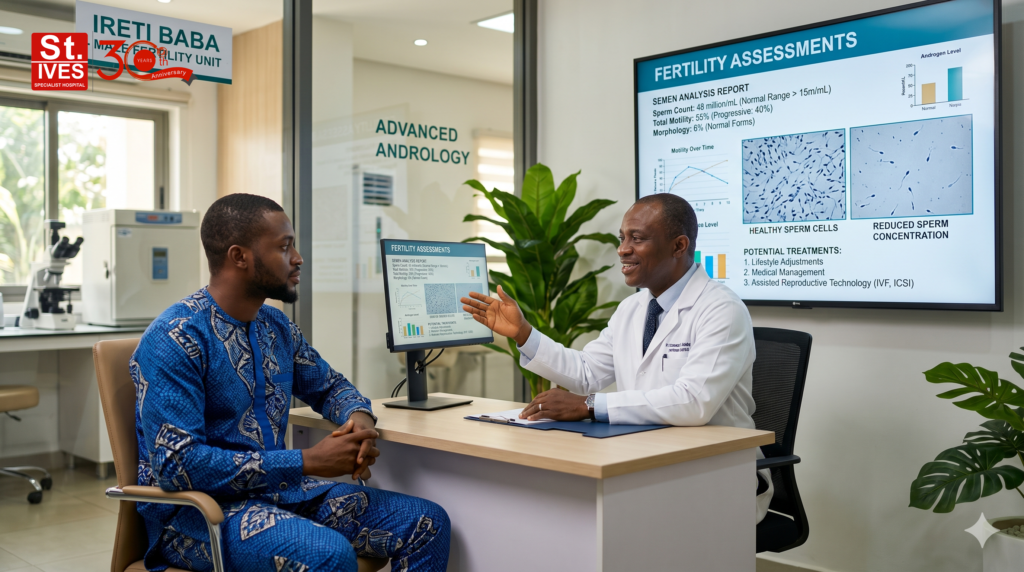
Causes of Low Sperm Count
Several factors can contribute to this condition, including:
- Smoking
- Excessive alcohol consumption
- Obesity
- Hormonal imbalances
- Infections
- Varicocele
- Environmental toxins
- Certain medications
Fortunately, many men respond well to treatment. Depending on the underlying cause, lifestyle changes, medications, or fertility procedures may improve sperm quality.
5. Lifestyle Factors That Affect Fertility
Modern lifestyles have introduced several habits that can negatively affect reproductive health.
Although some effects may seem minor initially, they can gradually impact fertility over time.
Smoking
Smoking damages both eggs and sperm. In addition, it may reduce the success rates of fertility treatments.
Excessive Alcohol Consumption
Alcohol can affect hormone balance and reproductive function. Consequently, fertility may decline when consumption becomes excessive.
Obesity
Maintaining a healthy weight is important for reproductive health.
For example, excess weight can:
- Disrupt ovulation
- Affect sperm production
- Reduce fertility treatment success rates
Chronic Stress
While stress alone may not directly cause infertility, it can influence hormone levels and overall wellbeing.
As a result, fertility journeys may become even more emotionally challenging.
Poor Nutrition
A balanced diet supports healthy reproductive function. Therefore, nutritional deficiencies should not be overlooked during fertility evaluations.
What 30 Years of Fertility Care Has Taught Us About Infertility

As St. Ives Specialist Hospital prepares to celebrate 30 years of healthcare excellence, one important lesson continues to stand out:
Infertility is more common than many people think, and early intervention can make a remarkable difference.
Over the past three decades, our fertility specialists have supported thousands of individuals and couples through their fertility journeys.
Along the way, we have learned that successful fertility care requires much more than medical treatment alone.
Instead, the best outcomes often come from:
- Early diagnosis
- Personalized treatment plans
- Emotional support
- Advanced reproductive technology
- Experienced fertility specialists
- Ongoing patient education
Most importantly, we have learned that hope should never be lost.
Time and again, couples who once believed parenthood was out of reach have gone on to welcome healthy babies through expert fertility care.
As we mark 30 years of caring for women, men, children, and families, we remain committed to helping more people achieve their dreams of building a family.
Why Choose St. Ives Specialist Hospital for Fertility Care?
Choosing the right fertility hospital can make a significant difference in your journey.
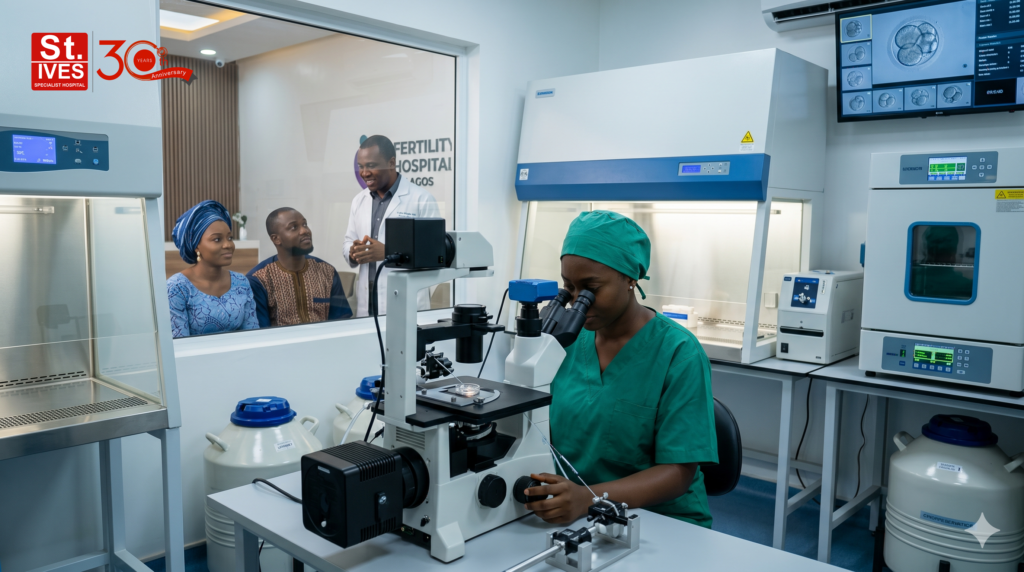
At St. Ives Specialist Hospital, we combine decades of experience with advanced reproductive medicine to provide comprehensive fertility care.
Our services include:
✔ Fertility assessments
✔ Male infertility treatment
✔ Female fertility investigations
✔ Fertility preservation
✔ Family health services
✔ Personalized fertility support
For nearly three decades, families have trusted us to provide compassionate, expert-led fertility care in Lagos, Nigeria.
Conclusion
Infertility can be challenging. Nevertheless, it is important to remember that many fertility problems are treatable.
Whether the cause is PCOS, fibroids, low sperm count, delayed childbearing, blocked fallopian tubes, or unexplained infertility, effective treatment options are available.
Furthermore, seeking help early often increases the chances of a successful outcome.
If you have been trying to conceive without success, now may be the right time to speak with a fertility specialist.
At St. Ives Specialist Hospital, we are committed to providing expert fertility care, advanced reproductive treatments, and compassionate support every step of the way.
Because every family deserves hope, answers, and the opportunity to grow.
World Health Organization (WHO)
https://www.who.int/news-room/fact-sheets/detail/infertility
American Society for Reproductive Medicine (ASRM)
https://www.reproductivefacts.org
Centers for Disease Control and Prevention (CDC)
https://www.cdc.gov/reproductivehealth/infertility
