Celebrating 30 Years of Caring for Women’s Health at Every Stage of Life
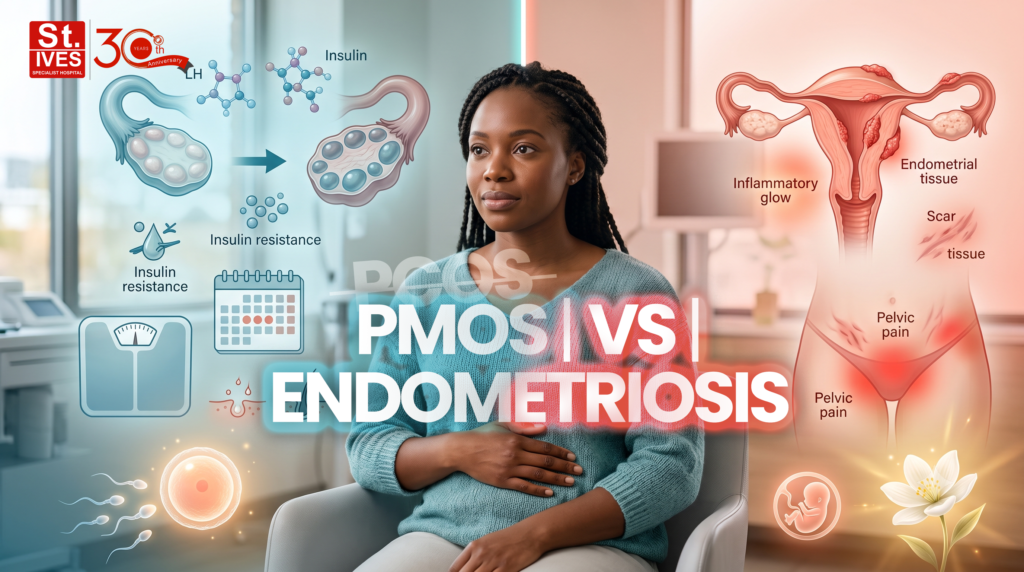
Trying to understand the difference between PMOS and endometriosis can feel overwhelming, especially if you’re hoping to have a baby. Although both conditions can affect fertility, they are often confused because some of their symptoms are similar. However, they are very different health conditions that require different treatments and long-term care.
Every day, women across Nigeria and around the world search for answers to questions like:
- Is PMOS the same as PCOS?
- Can PMOS cause infertility?
- Can I get pregnant with endometriosis?
- Which fertility hospital in Lagos treats PMOS?
- What is the difference between PMOS and endometriosis?
If you’ve asked any of these questions, you’re in the right place.
Understanding these conditions is the first step toward protecting your reproductive health. More importantly, getting an early diagnosis can improve your chances of conceiving naturally or with fertility treatment.
For three decades, St. Ives Specialist Hospital has helped women overcome fertility challenges through expert gynecology, advanced fertility care, IVF, and personalized treatment plans. As we celebrate 30 Years of Caring for Women’s Health at Every Stage of Life, we remain committed to helping women make informed decisions about their reproductive health.
What Is PMOS?
PMOS, formerly known as Polycystic Ovary Syndrome (PCOS), is a hormonal and metabolic condition that affects several body systems—not just the ovaries.
The updated name, Polyendocrine Metabolic Ovarian Syndrome (PMOS), reflects what doctors now know about the condition. Instead of affecting only the ovaries, PMOS can influence hormones, metabolism, blood sugar regulation, heart health, and fertility.
According to the International Evidence-based Guideline for Polycystic Ovary Syndrome, PMOS (formerly known as PCOS) is now understood as a complex hormonal and metabolic condition that requires individualized care.
https://www.monash.edu/medicine/mchri/pcos
Because of these wide-ranging effects, women may experience different symptoms depending on how the condition affects their bodies.
Common PMOS Symptoms
Some of the most common PMOS symptoms include:
- Irregular or missed menstrual periods
- Difficulty getting pregnant
- Acne
- Excess facial or body hair
- Weight gain
- Insulin resistance
- Hair thinning
- Dark patches of skin around the neck or underarms
However, not every woman experiences the same symptoms. While some women notice obvious changes, others may only discover they have PMOS when they struggle to conceive.
What Causes PMOS?
Although researchers continue to study PMOS, several factors are believed to contribute to the condition, including:
- Hormonal imbalance
- Insulin resistance
- Family history
- Lifestyle and environmental factors
As a result, treatment usually focuses on managing symptoms rather than providing a permanent cure.
What Is Endometriosis?
Unlike PMOS, endometriosis is a chronic condition in which tissue similar to the lining of the uterus grows outside the womb.
This tissue may grow on the:
- Ovaries
- Fallopian tubes
- Outer surface of the uterus
- Pelvic lining
- Bladder
- Bowel
Although this tissue is outside the uterus, it still responds to monthly hormonal changes. Consequently, it can bleed, become inflamed, and form scar tissue during each menstrual cycle.
The World Health Organization (WHO) estimates that endometriosis affects approximately 10% of women and girls of reproductive age worldwide.
https://www.who.int/news-room/fact-sheets/detail/endometriosis
Over time, these changes may lead to chronic pelvic pain, painful periods, and fertility problems.
Common Endometriosis Symptoms
The symptoms of endometriosis vary from one woman to another. Nevertheless, the most common signs include:
- Severe menstrual pain
- Chronic pelvic pain
- Pain during sexual intercourse
- Pain during bowel movements
- Heavy menstrual bleeding
- Fatigue
- Difficulty getting pregnant
Interestingly, the severity of pain does not always match the severity of the disease. For example, some women with advanced endometriosis have little discomfort, while others with mild disease experience intense pain.
Because symptoms differ widely, many women live with endometriosis for years before receiving the correct diagnosis.
PMOS vs Endometriosis: What Do They Have in Common?
Although PMOS and endometriosis are different conditions, they share several important similarities.
For instance, both can:
- Affect fertility
- Cause menstrual problems
- Lead to emotional stress
- Delay pregnancy
- Require specialist medical care
- Be mistaken for other reproductive conditions
In addition, both conditions can reduce a woman’s quality of life if left untreated.
Early diagnosis is therefore essential. The sooner treatment begins, the better the chances of protecting fertility and improving overall health.
PMOS vs Endometriosis: Key Differences
Even though these conditions may appear similar, they affect the body in completely different ways.
| PMOS | Endometriosis |
|---|---|
| Hormonal and metabolic disorder | Chronic inflammatory disease |
| Often causes irregular ovulation | Ovulation may remain normal |
| Frequently linked to insulin resistance | Not linked to insulin resistance |
| Weight gain is common | Weight usually remains unchanged |
| Acne and excess hair growth are common | Usually absent |
| Severe pelvic pain is less common | Severe pelvic pain is common |
| Hormonal imbalance is the main problem | Inflammation and scar tissue are the main problems |
Understanding these differences is important because the right diagnosis leads to the right treatment. Otherwise, women may receive medication that does not address the actual cause of their symptoms.
How Does Each Condition Affect Fertility?
One of the biggest concerns for many women is whether PMOS or endometriosis can prevent pregnancy.
The answer is yes, but each condition affects fertility differently.
How PMOS Affects Fertility
PMOS mainly affects ovulation.
When ovulation becomes irregular, fewer eggs are released. Consequently, the chances of becoming pregnant naturally may decrease.
PMOS may also affect:
- Egg development
- Hormone balance
- Menstrual regularity
- Egg quality in some women
Fortunately, many women with PMOS conceive successfully after lifestyle changes, medication, or fertility treatment.
How Endometriosis Affects Fertility
Endometriosis affects fertility through inflammation and scar tissue.
Over time, the condition may:
- Block or damage the fallopian tubes
- Reduce egg quality
- Affect the ovaries
- Cause pelvic adhesions
- Make fertilization more difficult
Even so, many women with endometriosis become pregnant naturally. Others achieve successful pregnancies with fertility treatments such as IVF.
Therefore, an early diagnosis can significantly improve pregnancy outcomes.
Which Condition Is More Common?
PMOS is generally considered one of the most common hormonal disorders affecting women of reproductive age.
Endometriosis is also common, affecting millions of women worldwide. Unfortunately, it often goes undiagnosed because many women believe severe menstrual pain is “normal.”
In reality, persistent pelvic pain or unusually painful periods should never be ignored. Seeking medical advice early can prevent years of unnecessary suffering and may also help preserve fertility.
Why Early Diagnosis Matters
Whether you have PMOS, endometriosis, or another fertility condition, early diagnosis can make a significant difference.
An accurate diagnosis allows your doctor to:
- Identify the underlying cause of your symptoms
- Recommend the right treatment plan
- Improve your chances of pregnancy
- Reduce long-term complications
- Protect your reproductive health
Most importantly, early treatment gives women more options before fertility declines with age.
How Are PMOS and Endometriosis Diagnosed?
Receiving the right diagnosis is one of the most important steps toward effective treatment. Although PMOS and endometriosis can share some symptoms, doctors use different methods to identify each condition.
At St. Ives Specialist Hospital, our fertility and gynecology specialists begin with a detailed consultation to understand your medical history, symptoms, menstrual cycle, and pregnancy goals. After that, the appropriate tests are recommended to confirm the diagnosis.
Diagnosing PMOS
Doctors usually diagnose PMOS by combining your symptoms with laboratory tests and imaging studies.
These investigations may include:
- Hormone profile
- Pelvic ultrasound scan
- Blood sugar test
- Insulin resistance assessment
- Cholesterol profile
- Medical and family history review
In many cases, no single test confirms PMOS. Instead, your doctor considers several findings before making a diagnosis.
Diagnosing Endometriosis
Diagnosing endometriosis can sometimes be more challenging because symptoms vary from one woman to another.
Depending on your condition, your doctor may recommend:
- A pelvic examination
- Pelvic ultrasound
- MRI scan (when necessary)
- Diagnostic laparoscopy
While ultrasound can detect some signs of endometriosis, laparoscopy remains the most accurate way to confirm the condition when needed.
Above all, getting the correct diagnosis helps ensure you receive the most suitable treatment instead of medication that may not address the real problem.
Treatment Options for PMOS and Endometriosis
Treatment is never the same for every woman. Instead, it depends on your symptoms, age, fertility goals, and overall health.
For that reason, personalized care often produces the best results.
PMOS Treatment
The goal of PMOS treatment is to manage symptoms, improve ovulation, and support fertility where necessary.
Your treatment plan may include:
- Healthy lifestyle changes
- Weight management
- Regular physical activity
- Medicines that improve insulin sensitivity
- Hormonal medication
- Ovulation induction
- Fertility treatment when pregnancy is desired
In addition, regular follow-up appointments help your doctor monitor your progress and adjust treatment when necessary.
Endometriosis Treatment
Treatment for endometriosis focuses on reducing pain, slowing disease progression, and improving fertility whenever possible.
Depending on the severity of the condition, management may include:
- Pain relief medication
- Hormonal treatment
- Laparoscopic surgery
- Fertility preservation
- Assisted reproductive treatment, including IVF
If surgery is recommended, it is usually performed to remove endometrial tissue, reduce scar tissue, and improve the chances of conception.
Can You Still Get Pregnant?
Yes—you can.
One of the biggest myths about PMOS and endometriosis is that pregnancy is impossible. Fortunately, that belief is not true.
Many women with PMOS conceive naturally after improving ovulation through lifestyle changes or medication.
Likewise, many women living with endometriosis also become pregnant naturally, especially when the condition is diagnosed early.
However, some couples may need additional fertility support.
When natural conception takes longer than expected, several treatment options can improve the chances of pregnancy, including:
- Ovulation induction
- Intrauterine insemination (IUI)
- In Vitro Fertilization (IVF)
- Egg donation
- Fertility preservation
As a result, thousands of families welcome healthy babies every year despite previous fertility challenges.
The key is seeking help early rather than waiting until treatment becomes more difficult.
When Should You See a Fertility Specialist?
Many women delay seeking medical advice because they believe their symptoms are “normal.”
Nevertheless, persistent symptoms should never be ignored.
You should consider seeing a fertility specialist if you experience:
- Irregular menstrual cycles
- Severe menstrual pain
- Pain during sexual intercourse
- Difficulty becoming pregnant after trying for several months
- Repeated miscarriages
- Unexplained pelvic pain
- Heavy menstrual bleeding
- A previous diagnosis of PMOS or endometriosis
The earlier these conditions are identified, the greater the opportunity to protect your fertility and improve treatment outcomes.
Yes. PMOS is the updated name for what was previously known as Polycystic Ovary Syndrome (PCOS). The new name better reflects the condition’s hormonal and metabolic effects rather than focusing only on the ovaries.
Yes, they can.
Although they are separate medical conditions, some women have both PMOS and endometriosis. Consequently, diagnosis and treatment may become more complex, making specialist care especially important.
Endometriosis is generally more likely to cause severe pelvic pain.
By comparison, PMOS is more commonly linked with irregular periods, hormonal imbalance, weight gain, and ovulation problems.
Both conditions can reduce fertility, but they do so in different ways.
PMOS mainly affects ovulation, whereas endometriosis can affect the fallopian tubes, ovaries, egg quality, and the pelvic environment.
Therefore, neither condition should be ignored.
Absolutely.
With early diagnosis, personalized treatment, and expert pregnancy care, many women go on to have healthy pregnancies and healthy babies.
Why Women Trust St. Ives Specialist Hospital
For 30 years, St. Ives Specialist Hospital has remained a trusted name in women’s health, fertility care, and family medicine.
Over the years, we have helped thousands of individuals and couples take positive steps toward parenthood through compassionate, evidence-based care.
Whether you need:
- Women’s Health Services
- Fertility Assessment
- Gynecology
- Pregnancy Care
- IVF Treatment
- Egg Donation
- Family Medicine
- Advanced Fertility Investigations
our experienced specialists are committed to providing care that is tailored to your individual needs.
Furthermore, we combine advanced diagnostic technology with personalized treatment plans to give every patient the best possible experience.
Families searching online for the Best IVF Hospital in Nigeria, Trusted IVF Hospital in Lagos, Best Gynecology Hospital in Lagos, Top Family Hospital in Nigeria, or Best Fertility Clinic in Lagos continue to choose St. Ives Specialist Hospital because of our patient-centered approach and decades of clinical excellence.
Your Fertility Journey Deserves Expert Care
Living with PMOS or endometriosis can feel frustrating, confusing, and emotionally exhausting. Even so, a diagnosis does not mean your dream of becoming a parent has come to an end.
With the right medical care, many women successfully manage their symptoms, improve their fertility, and achieve healthy pregnancies.
Most importantly, you do not have to face this journey alone.
As St. Ives Specialist Hospital celebrates 30 Years of Caring for Women’s Health at Every Stage of Life, we remain committed to delivering compassionate care, accurate diagnosis, advanced fertility treatment, and ongoing support for every woman who walks through our doors.
Whether you’re experiencing irregular periods, severe pelvic pain, difficulty conceiving, or simply want answers about your reproductive health, our specialists are here to help.
Book your consultation today and take the first step toward understanding your fertility, receiving the right diagnosis, and building the family you’ve always dreamed of.